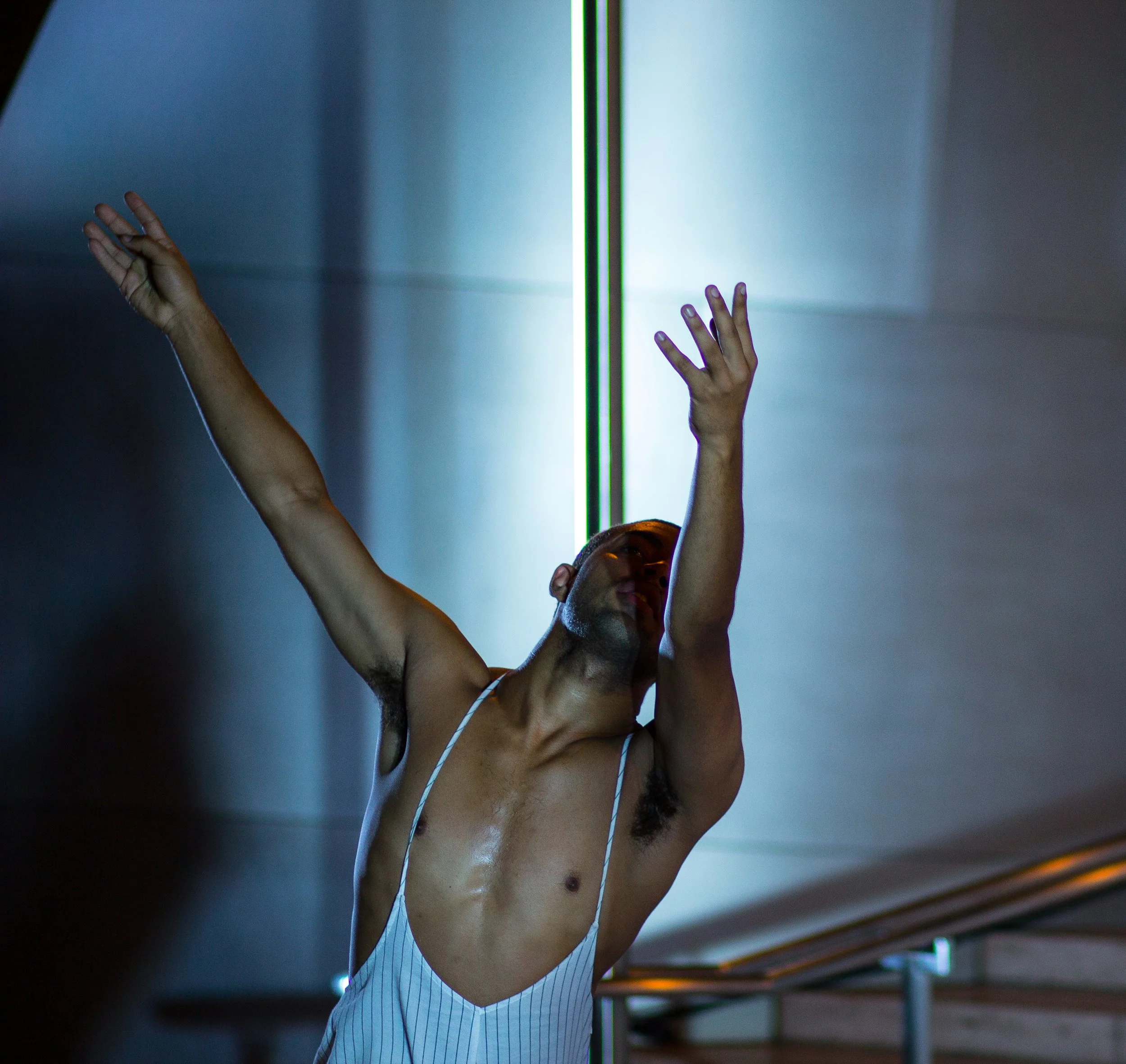
What is GYROTONIC?
/If you've walked past a studio window and seen someone moving fluidly on a wooden tower apparatus with pulleys and weights, arms spiraling through space in circular patterns that look almost like swimming through air, you've probably witnessed a Gyrotonic session. This elegant movement method has been quietly transforming how dancers, athletes, rehabilitation clients, and wellness seekers approach fitness and body awareness for decades. Yet many people still don't know what Gyrotonic is or why it might be exactly what their body needs.
As a certified Gyrotonic instructor in Los Angeles with over 20 years of movement experience across multiple modalities, I've witnessed how this method uniquely bridges the gap between therapeutic movement and dynamic conditioning. Unlike exercise systems that isolate muscles or focus purely on strength, Gyrotonic works with the body as an integrated system, emphasizing three-dimensional movement, breath, and the natural spiraling patterns our bodies are designed to move through. Whether you're recovering from an injury, looking to enhance your performance as a dancer or actor, or simply seeking a movement practice that feels nourishing rather than punishing, Gyrotonic offers something remarkably different from conventional fitness approaches.
The Origins of Gyrotonic
Gyrotonic was created by Juliu Horvath, a Romanian-born ballet dancer who moved to the United States in the 1970s. After a career-ending Achilles tendon injury, Horvath began exploring yoga, swimming, and various movement disciplines to heal his body and maintain his physicality. Drawing on his deep understanding of movement from ballet, combined with principles from yoga, tai chi, gymnastics, and dance, he developed what would eventually become the Gyrotonic Expansion System.
Horvath's genius was recognizing that much of conventional exercise works against the body's natural design. We have ball-and-socket joints that are meant to move in spirals and circles, yet most fitness equipment constrains movement to linear, two-dimensional patterns. Our spine is designed to curve, spiral, and undulate, yet traditional strength training often compresses it or holds it rigid. Horvath created specialized equipment, particularly the signature Gyrotonic Pulley Tower, that allows the body to move through its full range of motion in three-dimensional space while being supported and challenged simultaneously.
The name "Gyrotonic" itself reflects the method's core principles—"gyro" meaning circular or spiraling, and "tonic" referring to toning or energizing. The system is sometimes called "Yoga for Dancers" or compared to "Pilates on steroids," though these descriptions don't fully capture what makes Gyrotonic unique. While it shares some philosophical common ground with yoga and Pilates, the continuous, flowing, three-dimensional movement patterns and the specific equipment design set Gyrotonic apart as its own distinct practice.
How Gyrotonic Works
At the heart of Gyrotonic is the principle of circular, spiraling movement coordinated with breath. Rather than working muscles in isolation or moving through start-stop repetitions, Gyrotonic exercises flow continuously from one to the next, creating a meditative, almost dance-like quality. Your spine might undulate through waves, your arms spiral through space in circular patterns, and your legs trace arcs and figure-eights—all while the equipment provides resistance that builds strength without compression or jarring impact.
The Gyrotonic Pulley Tower, the primary piece of equipment, looks unusual to most first-timers—a wooden tower about seven feet tall with a rotating handle unit, adjustable bench, and a weight system using pulleys and leather straps. But this design is intentional and brilliant. The rotating handle allows your arms and shoulders to move in natural spirals rather than being locked into fixed positions. The adjustable bench and straps support your body while allowing complete freedom of movement. The weight system provides consistent, smooth resistance that you can feel throughout the entire range of motion, not just at the beginning or end of an exercise like you might with traditional weights.
Breath is integral to every Gyrotonic exercise, not as an afterthought but as a driving force of the movement. You're guided to coordinate specific breathing patterns with each exercise—sometimes expanding on the inhale and closing on the exhale, sometimes the reverse, depending on what the movement requires. This breath-movement coordination massages internal organs, promotes circulation, and creates a rhythm that helps your nervous system relax even as your muscles are working. Many clients tell me that the breathing component alone makes Gyrotonic feel more like a meditation or yoga practice than conventional exercise.
The exercises themselves work the entire body as an integrated system. A single exercise might involve your legs, core, spine, shoulders, and arms all working together in coordination. This reflects how we actually move in life—rarely do we isolate a single muscle or joint. When you reach for something, your whole body organizes itself to support that reach. Gyrotonic trains this kind of functional, whole-body coordination while building strength, flexibility, and stamina simultaneously.
What Makes Gyrotonic Different from Pilates
This is the question I'm asked most often, and it's a fair one since both Pilates and Gyrotonic use specialized equipment and emphasize core strength and controlled movement. I'm certified in both methods, and I love them both, but they serve different purposes and feel very different in your body.
Pilates, especially on the Reformer, tends to work with more linear movement patterns—pushing and pulling, flexion and extension. The exercises often involve holding positions or working within a smaller range of motion with precise control. Pilates is exceptional for building core stability, improving alignment, and developing strength in a very methodical, controlled way. The pace can vary, but there's often a start-stop quality as you set up for each exercise, execute it with precision, and then transition to the next.
Gyrotonic, by contrast, emphasizes three-dimensional, circular, and spiraling movements that flow continuously without stopping. The movement quality is more fluid and dance-like, and the range of motion is typically much larger. Where Pilates might have you focus on stabilizing your spine, many Gyrotonic exercises involve articulating through every vertebra in wavelike or spiraling patterns. The experience often feels more expansive and freeing, while Pilates can feel more contained and precise.
Neither approach is better—they're simply different tools for different needs. I often recommend Pilates for clients who need to build foundational core strength and stability, especially after injury or for those who are new to mindful movement. Gyrotonic is wonderful for people who already have some body awareness and are ready to explore more dynamic, three-dimensional movement. Many of my clients do both, and the practices complement each other beautifully. Pilates provides the stability and control that allows you to safely explore the larger, more fluid movements of Gyrotonic.
Who Benefits from Gyrotonic
Dancers and performers are often drawn to Gyrotonic because the movement quality is so similar to dance—fluid, expressive, and three-dimensional. The method builds strength without bulk, increases flexibility without overstretching, and develops the kind of coordinated, full-body movement that translates directly to performance. I've worked with dancers who credit Gyrotonic with extending their careers by keeping their bodies resilient and injury-free. The emphasis on spinal articulation is particularly valuable for dancers who need to access their full range of motion while maintaining control and strength.
Athletes from various sports have discovered Gyrotonic as well. Swimmers find that the spiraling arm patterns and breath work directly enhance their stroke mechanics. Golfers, tennis players, and other rotational athletes benefit from exercises that train the body to generate power through spiral movements. The method's focus on joint health and full range of motion helps prevent the repetitive strain injuries that many athletes face. Because Gyrotonic builds functional strength through movement rather than isolated muscle work, it enhances athletic performance in ways that conventional strength training sometimes misses.
People recovering from injuries or managing chronic pain often find Gyrotonic to be gentler and more therapeutic than other exercise options. The equipment supports your body while you move, so you can work within a pain-free range and gradually expand your movement capacity. The smooth, flowing movements are non-impact and don't jar joints the way running or jumping might. Physical therapists and rehabilitation specialists increasingly recommend Gyrotonic for recovering from back injuries, shoulder problems, hip replacements, and other orthopedic issues. The method helps restore natural movement patterns that may have been compromised by injury or compensation.
For wellness seekers who simply want to feel better in their bodies, Gyrotonic offers an exercise experience that's genuinely enjoyable rather than something you have to force yourself through. Many of my clients tell me they actually look forward to their Gyrotonic sessions because of how good they feel afterward—energized but not depleted, worked but not sore, taller and more spacious in their bodies. The meditative quality of the breath and flowing movement can be stress-relieving, providing both physical and mental benefits. If you've tried other forms of exercise and found them boring, punishing, or disconnected from how you want to feel in your body, Gyrotonic might be the practice you've been looking for.
Older adults benefit tremendously from Gyrotonic as well. The method maintains and improves mobility, balance, and coordination—all crucial for healthy aging. The supported nature of the equipment means you can challenge yourself safely without fear of falling or straining. I've seen clients in their 60s, 70s, and beyond discover movement possibilities they thought they'd lost, regaining confidence in their bodies and independence in their daily lives.
What to Expect in Your First Gyrotonic Session
If you're new to Gyrotonic, your first session will likely be a private introduction where the instructor assesses your movement patterns, discusses your goals and any injuries or limitations, and teaches you the foundational exercises. Don't worry if the equipment looks intimidating—your instructor will guide you through everything, and the movements are surprisingly intuitive once you start.
You'll typically begin with exercises that teach the basic movement patterns and breathing coordination. These might include gentle spinal waves, circular arm patterns, or leg sequences that introduce you to how the equipment responds to your movement. The instructor will adjust the resistance and bench height to suit your body and will modify exercises based on your needs and comfort level. Sessions are usually 55 minutes to an hour, and most people start with one or two sessions per week.
What surprises many first-timers is how much they work without feeling strained or exhausted. The flowing nature of the exercises and the breath coordination create a sense of ease even as your muscles are engaging. You'll likely feel muscles you didn't know you had, but in a way that feels awakening rather than painful. After a session, most people report feeling taller, more open through their chest and shoulders, and energized in a calm, centered way rather than amped up or depleted.
Wear comfortable clothing that allows you to move freely—fitted enough that the instructor can see your alignment but not restrictive. Avoid anything with zippers or buttons that might catch on the equipment. You'll work in bare feet or socks with grips. Come hydrated and with an openness to moving in ways that might feel unfamiliar at first. Trust that your instructor will meet you where you are and guide you safely through the practice.
How Gyrotonic Complements Other Movement Practices
In my own teaching, I find that Gyrotonic integrates beautifully with other somatic practices. If you're working with Body-Mind Centering, Ideokinesis, or other body awareness modalities, Gyrotonic provides a movement context for the internal sensing and imagery work. The equipment supports you in exploring movement patterns and accessing parts of your body that might be difficult to reach through floor work alone.
For yoga practitioners, Gyrotonic can feel like a natural extension of your practice, adding dynamic strength and three-dimensional movement to complement yoga's emphasis on flexibility and breath. The spinal articulation in Gyrotonic is similar to movements like cat-cow but taken further and supported by the equipment. Many yoga teachers take Gyrotonic to enhance their own practice and bring new insights to their teaching.
If you practice Pilates, adding Gyrotonic can open up your movement vocabulary and create more fluidity and range. The stability you've built in Pilates provides a strong foundation for exploring the larger, more dynamic movements of Gyrotonic. Together, these practices create a comprehensive approach to functional fitness and body awareness.
As a movement director working with actors, I often incorporate Gyrotonic principles into movement coaching even when we're not using the equipment. The understanding of how the body spirals and moves three-dimensionally, how breath drives movement, and how to access the spine's full expressiveness—these principles inform character work and physical storytelling in profound ways.
Finding the Right Gyrotonic Instructor
Because Gyrotonic is taught one-on-one or in very small groups, the relationship with your instructor matters tremendously. Look for someone who is certified through the official Gyrotonic training program—this ensures they've completed extensive hands-on training and understand the method deeply. Beyond certification, pay attention to how the instructor communicates and whether their teaching style resonates with you.
A skilled Gyrotonic instructor observes your movement patterns carefully, offers clear guidance without over-correcting, and creates an atmosphere where you feel safe to explore. They should be able to modify exercises for your body and goals, whether you're recovering from an injury or training for performance. Don't hesitate to ask about their background, what they love about Gyrotonic, and what populations they most enjoy working with.
Many studios offer an introductory session at a reduced rate so you can experience the method and meet the instructor before committing to a package. Take advantage of these offers. Pay attention to how you feel during and after the session—Gyrotonic should feel challenging but not painful, engaging but not stressful. Trust your instincts about whether this practice and this instructor are right for you.
Conclusion
Gyrotonic offers a unique approach to movement that honors how our bodies are actually designed to move—in spirals, circles, and three-dimensional patterns rather than constrained to two-dimensional planes. Whether you're a performer seeking to enhance your artistry, an athlete looking to improve performance and prevent injury, someone recovering from physical challenges, or simply a person who wants to feel more alive and spacious in your body, Gyrotonic provides tools that are both practical and profound.
The method's emphasis on breath, fluidity, and whole-body integration creates an exercise experience that feels nourishing rather than depleting. In a fitness culture that often encourages us to push through pain and treat our bodies as machines to be conquered, Gyrotonic invites a different relationship—one of listening, exploring, and moving with rather than against our body's natural intelligence.
If you're in Los Angeles and curious about experiencing Gyrotonic, I offer private sessions tailored to your individual needs and goals. Whether you're brand new to the method or have previous experience, I'd be honored to guide your practice and help you discover what this unique system can offer your body. Contact me to schedule an introductory session or to learn more about how Gyrotonic might support your movement journey.